
Start of Main Content
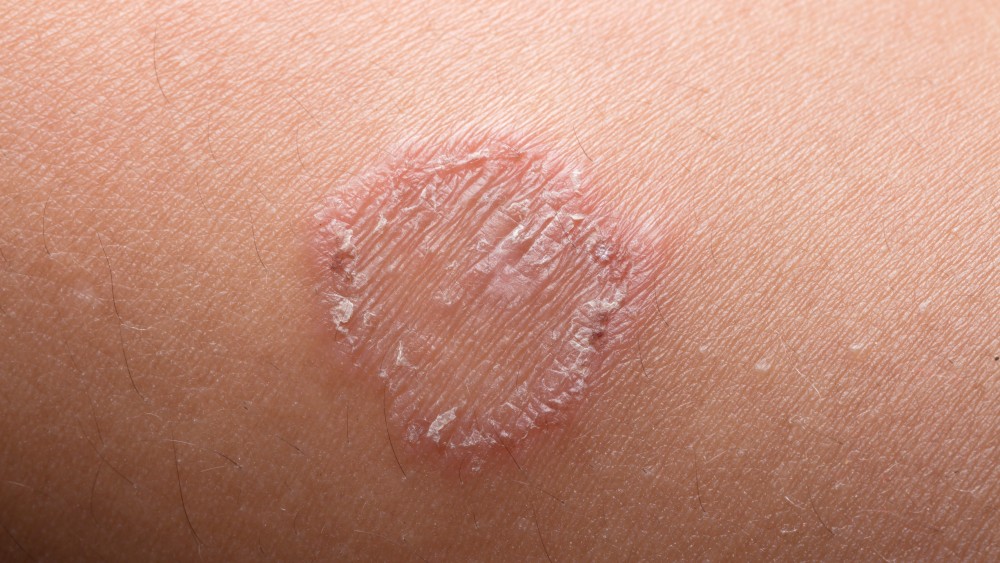
How do you get ringworm?
Ringworm is very contagious and spreads easily. These fungi love warm, moist places to grow and thrive. You can pick up ringworm through direct skin-to-skin contact with someone who has the infection, by touching infected pets like dogs and cats, or by touching infected surfaces or objects.Ringworm affects people of all ages. You’re more at risk for ringworm if you:
- Have a weakened immune system or an autoimmune disease.
- Participate in high-contact sports, such as wrestling.
- Sweat excessively (hyperhidrosis).
- Use public locker rooms, public showers, or share crowded living spaces.
- Work closely with animals that might have ringworm.
How is it diagnosed?
Ringworm symptoms usually show up anywhere from 4 to 14 days after you come into contact with the fungi. The hallmark sign is an itchy, circular or oval rash. It often has a raised, scaly border with a clearer or less red center, giving it a "ring" appearance.Ringworm can show up on different parts of your body:
- Body: The classic ring-shaped rash on your arms, legs, or trunk.
- Scalp: Can cause scaly, itchy, bald patches, especially common in children.
- Feet (athlete's foot): Leads to red, peeling, itchy skin, often between the toes.
- Groin (jock itch): Causes itchy, scaly, red spots in the groin area.
- Nails: Can make nails thick, discolored, and brittle.
Treatment for ringworm
The good news is that ringworm is very treatable! The treatment depends on how severe your infection is and where it's located.For mild cases, over-the-counter (OTC) antifungal creams, gels, or powders are often effective. Look for ingredients like clotrimazole (Lotrimin), miconazole (Desenex), terbinafine (Lamisil AT), or tolnaftate (Tinactin). You'll need to apply these as directed, usually for 2 to 4 weeks, even if your rash starts to look better sooner. If you stop too early, the infection can come back.
If OTC treatments don't work, or if the ringworm is widespread or on your scalp, your healthcare provider might prescribe stronger topical medications or oral antifungal pills. A key tip: never use cortisone or hydrocortisone creams on a fungal rash; they can actually make ringworm worse.
It's important to keep the infected area clean and dry. Avoid scratching the rash and wash your hands after touching it to prevent spreading it to other parts of your body or to other people.
Preventing the spread of ringworm
If you are diagnosed with ringworm, you’ll want to ensure that you don’t spread it to others.- Avoid sharing personal items such as towels, combs, hats, or clothing.
- Shower promptly after exercising. Sweat creates a warm, moist environment that favors fungal growth; therefore, washing and thoroughly drying your skin helps prevent infections.
- Wear shower sandals or flip flops in locker rooms, public showers, and around pools.
- Change your clothes, especially underwear and socks, every day. Wash all clothing, including workout gear, before wearing it again.
- Wash towels and bedding frequently using hot, soapy water to help eliminate any lingering fungus.
